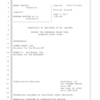
Her testimony revealed significant limitations in what she knew, whom she consulted, how the sessions were conducted, and whether the allegations she treated as trauma memories had ever been independently verified.
The following highlights are taken directly from the certified court transcript.
1. Rattner Said She Was Not Acting as a Forensic Evaluator
During cross-examination, Rattner acknowledged that there is a difference between a therapist and a forensic evaluator.
Q. And there’s a difference between the role of a therapist and the role of a forensic evaluator, correct?
A. Yes.
Q. And which role did you have in this case?
A. I’m a trauma therapist.
This distinction matters. A treating therapist may work with what a patient reports. A forensic evaluator is expected to assess competing information, examine corroborating and contradictory evidence, and determine whether reported events can be independently supported.
Rattner repeatedly testified that investigating the allegations was not her role. Nevertheless, she later offered opinions to the court regarding abuse and whether reunification should occur.
Transcript reference: pages 35–36.
2. She Did Not Investigate Whether the Allegations Were True
Rattner testified that objective findings were not important to the type of therapy she performed.
Q. To you that wouldn’t be important to know whether or not there are objective findings to validate the allegations being made?
A. Again, the way I explained it previously, what we ask for is for each client is the worst things that have ever happened to them.
When asked whether objective information would be necessary before confronting a client with the possibility that an event had not occurred, she answered:
A. That is not the way trauma therapy is conducted.
She later summarized her approach:
A. What I asked them for is the worst-things list; what I treat is the worst-things list.
In other words, Rattner treated the reported material as trauma content without first determining whether it was accurate, corroborated, contradicted, suggested, misunderstood, or previously rejected by investigators.
Transcript reference: pages 36–38 and 56–58.
3. She Never Spoke With Me or Several Other People With Relevant Information
Rattner acknowledged that she never spoke with me before forming opinions about me, my son, or reunification.
Q. Did you ever speak with Karen Cegalis?
A. No.
She also testified that she had not spoken with Gary Weatherby, Stephen Cegalis, Nancy Cegalis, or Karin Bar-Zeev.
Rattner could not establish that she had received the complete family court record. She did not believe she had received the Children’s Unit for Special Investigations report and did not know whether she had reviewed reports from several professionals previously involved in the case.
When asked whether it was important to know what prior therapists had concluded, she answered:
A. No. It’s not.
Her information therefore came from a narrow and one-sided channel while potentially contradictory sources were never contacted.
Transcript reference: pages 31–39, 55 and 56.
4. The Child’s Stepmother Was Present During All Thirteen Treatment Days
Under cross-examination, Rattner confirmed that my son’s stepmother attended every treatment day.
Q. How many times specifically was Marilynn Knutsen present during the times that you did therapy?
A. I met with L.C. for thirteen days, and she was present for all thirteen days.
Before meeting with the child, Rattner first met with Marilynn and asked what she believed would appear on the child’s “worst-things list.”
Rattner also testified that information supplied by the parent or guardian could be added to that list even if the child did not volunteer it.
A. If the child doesn’t offer something, we say, “and your parent told us about this,” so we put that on the list.
The adult supplying background information was therefore present throughout every treatment day in which disputed allegations were discussed and processed.
Transcript reference: pages 7, 16–17, 24–25, 36 and 45–46.
5. Rattner Did Not Know the National Standards for Interviewing Children
The allegations described in Rattner’s testimony were extraordinarily serious, yet she acknowledged that the sessions were not videotaped.
Q. With L.C. did you videotape the sessions?
A. No.
She was then asked:
Q. Are you aware what the national standards are for interviewing children?
A. No.
Rattner also acknowledged that memories can become distorted and that repeated processing can result in a person remembering events differently.
Q. Isn’t it true that repeating things over and over can result in remembering things differently?
A. As they reprocess the memory? Yes.
Without video recordings, no independent reviewer can evaluate how the allegations emerged or how the interviews were conducted.
Transcript reference: pages 44–46 and 56–58.
6. She Recommended Against Reunification Despite Knowing DCF Had Not Substantiated the Allegations
At the conclusion of cross-examination, Rattner was asked whether my son should participate in reunification therapy with me.
Q. By your standard should he be able to have reunification therapy with Karen Cegalis?
A. No.
On redirect, she justified that opinion by describing the alleged abuse as chronic and severe.
On recross-examination, however, she acknowledged that she knew the Vermont Department for Children and Families had investigated the allegations and had not substantiated them.
Q. Are you aware that DCF found these allegations not to be substantiated?
A. Yes.
She was also asked about law enforcement investigations that likewise had not substantiated the allegations. Rather than defer to those findings, she answered:
A. I collected my own data, and I make my own decision.
Yet, by her own testimony, that “data” did not include an independent investigation, an interview with me, review of the complete record, familiarity with national child-interviewing standards, or objective verification of the allegations.
Despite those limitations, she offered an opinion that supported continued separation between a child and his mother.
Transcript reference: pages 58–61.
Why This Testimony Matters
This testimony is significant not because a therapist listened to a child describe disturbing experiences. It is significant because Rattner moved beyond treatment and offered opinions to the court that carried profound legal and family consequences.
By her own testimony:
- She was not a forensic evaluator.
- She did not investigate whether the allegations occurred.
- She never interviewed the accused parent.
- She lacked important investigative and court records.
- She did not know national standards for interviewing children.
- My son’s stepmother attended all thirteen treatment days.
- She knew DCF had not substantiated the allegations.
- She nevertheless recommended against reunification.
The certified transcript allows readers to evaluate Bambi Rattner’s testimony in her own words.
Skip to PDF content