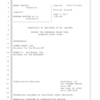
On June 26, 2018, the Massachusetts Board of Registration of Psychologists approved a public Consent Agreement placing psychologist Bambi M. Rattner, Psy.D. on probation for two years.
The document was not a warning letter. It was not a private recommendation that she improve her paperwork. It was a final disciplinary action requiring Rattner to practice under the supervision of another psychologist, attend at least ninety-six supervision sessions, submit to regular reporting, complete specialized continuing education, and pay the costs of complying with the agreement.
The reason was the Board’s investigation into her work with my child.
Rattner Was Hired to Provide Trauma Therapy
Rattner became involved with my child in connection with a family court order. Her stated role was to provide trauma therapy.
But according to the Consent Agreement, the allegations before the Board supported findings that she went far beyond the role of a treating therapist and entered the territory of a child custody evaluator.
That distinction is critical.
A therapist treats a patient. A custody evaluator is expected to conduct a neutral and adequately supported assessment of the family, the competing allegations, and the people whose conduct is being evaluated.
The Board’s agreement states that Rattner could have been found to have assumed a custody-evaluation role while her financial interests and her relationship with my child’s father and stepmother impaired her impartiality, competence, and effectiveness.
It further states that she failed to clarify, modify, or withdraw from that role despite the conflict of interest and multiple relationships involved.
The Board Addressed the False Trauma Narrative
The Consent Agreement did not merely criticize blurred professional boundaries.
It addressed the substance of what Rattner did with my child.
The agreement states that, if the matter proceeded to a disciplinary hearing, the Board could find that Rattner reinforced a false trauma and failed to address actual trauma caused by my child’s father and stepmother.
The Board could also find that this caused harm to my child, including harm resulting from the length and rigor of the treatment.
That language matters because Rattner’s work was repeatedly presented as though she had simply listened to and treated a traumatized child.
The disciplinary record tells a very different story.
It describes a psychologist who could have been found to have reinforced a trauma that was false, overlooked trauma attributed to the adults who retained and paid for the treatment, and continued a course of therapy that caused further harm.
Inadequate Examinations and Unsupported Conclusions
The Board also addressed the foundation for Rattner’s diagnoses and recommendations.
According to the Consent Agreement, the Board could find that Rattner conducted inadequate examinations of both my child and me before supporting a diagnosis and making recommendations.
That is especially significant because Rattner never personally evaluated me before reaching conclusions that affected whether I would have contact with my own child.
The agreement further states that she could have been found to have misinterpreted assessment results concerning the cause and nature of my child’s trauma and then based treatment on those misinterpreted results.
In plain English, the Board’s disciplinary record describes a process in which the assessment was inadequate, the results were misread, and the treatment was then built on the resulting mistake.
The consequences were not confined to a treatment room. Rattner’s conclusions entered court proceedings, were used to support the continued separation of my child from me, and were later repeated when she appeared as a paid witness for the defense in my civil trial against Raymond Knutsen.
Multiple Ethics Violations
The Consent Agreement identifies numerous provisions of the American Psychological Association’s Ethics Code that the Board could find Rattner violated.
- Standard 3.04: Avoiding harm.
- Standard 3.05: Multiple relationships.
- Standard 3.06: Conflicts of interest.
- Standard 9.01(b): Providing opinions about individuals without conducting an adequate examination.
- Standard 9.06: Proper interpretation of assessment results.
- Standard 10.02(b): Clarifying and managing conflicting roles in therapy involving couples or families.
These were not six variations of the same technical violation.
Together, they describe failures across nearly every major safeguard that should have governed Rattner’s involvement: objectivity, role clarity, adequate examination, responsible assessment, avoidance of harm, and freedom from conflicts of interest.
Two Years of Probation
The Board placed Rattner’s psychology license on probation for at least two years.
During that period, her practice was required to be supervised and monitored by a Board-approved licensed psychologist with expertise in:
- Family systems
- High-conflict divorce
- Psychological assessments
- Risk management
The required areas of expertise closely tracked the very subjects implicated by the disciplinary findings.
Rattner could not simply select a colleague and begin supervision. The proposed supervisor had to receive a copy of the Consent Agreement and be approved by the Board. The Board also reserved the right to require the proposed supervisor to appear personally before it.
At Least Ninety-Six Supervision Sessions
The supervision requirement was extensive.
Rattner was ordered to participate in fifty-minute sessions with the supervising psychologist on a weekly basis throughout the probationary period.
The agreement required no fewer than forty-eight sessions in each fifty-two-week period and a minimum of ninety-six sessions during the two years.
Those sessions were specifically required to focus on the issues identified in the disciplinary case, including the conduct described in the complaint and Rattner’s professional competence and compliance with the agreement.
This was not a passive arrangement in which another psychologist merely signed off on her license.
The supervising psychologist was authorized to discuss Rattner’s practice with the Board and was required to notify the Board in writing if any aspect of her conduct or practice posed a risk or potential for harm to a client or placed a client’s well-being at risk.
Quarterly Reports to the Board
The agreement also required written reports from the supervising psychologist every quarter.
Those reports were to document Rattner’s participation, progress, compliance, and the issues addressed during supervision. They could also include recommendations for additional personal or professional support.
Rattner and her supervisor could be required to appear before the Board or a Board subcommittee to answer questions about her practice and performance during probation.
In other words, the Board did not simply order her to obtain supervision and trust that it happened. It required an ongoing paper trail and retained the authority to question both Rattner and the person supervising her.
Additional Training in the Areas Where She Failed
In addition to the supervision required to maintain her probationary license, Rattner was ordered to complete six Board-approved continuing education units.
The required subjects were:
- Family systems
- High-conflict divorces
- Psychological assessments
- Risk management
These courses could not be counted toward the ordinary continuing education required for license renewal. They were additional requirements imposed as part of the disciplinary action.
Rattner Had to Pay for the Discipline Imposed on Her
The Consent Agreement made Rattner responsible for all costs and expenses associated with complying with its terms.
That included the cost of the supervising psychologist’s time, the preparation of reports, appearances before the Board, and other information the Board required.
The financial burden of satisfying the agreement therefore rested with Rattner, not the Commonwealth and not the public.
This Was a Final Public Disciplinary Action
The agreement states that it was entered in place of a disciplinary hearing and constituted a final act of the Board.
Rattner waived her right to an administrative hearing, waived her right to confront and cross-examine witnesses, waived her right to present evidence and testimony, and waived her right to appeal the matter.
The agreement also states that it is a matter of public record and may be provided to licensing boards in other states and to other interested individuals or entities as permitted or required by law.
This matters because the public disciplinary record cannot honestly be dismissed as an informal complaint, an unresolved accusation, or one person’s interpretation of what happened.
Rattner signed the agreement. The Massachusetts Board approved it. Her license was placed on probation. Her practice was subjected to supervision and monitoring. Additional education was required. Quarterly reporting was required. At least ninety-six supervision sessions were required.
What Massachusetts Did Not Call This
The Board used the restrained language typical of a professional licensing agreement.
It did not write that Rattner functioned as an advocate for one side of a custody dispute. It did not say that a treating psychologist had been permitted to help determine the fate of a mother she never evaluated. It did not describe in emotional terms what it meant for my child to undergo lengthy and rigorous treatment built upon a misinterpreted assessment and a false trauma narrative.
But the Board did not need dramatic language.
Its disciplinary terms reveal the seriousness of the case.
A psychologist hired to provide trauma therapy could have been found to have crossed into a custody-evaluation role, operated under a conflict of interest, conducted inadequate examinations, misinterpreted assessments, reinforced a false trauma, failed to address actual trauma attributed to the father and stepmother, and caused harm to the child she was supposed to help.
Massachusetts responded by placing her license on probation and requiring two years of monitored practice.
That is what the public record says.
Skip to PDF content